



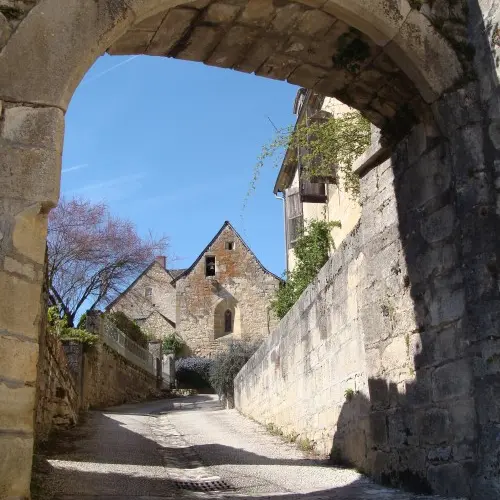
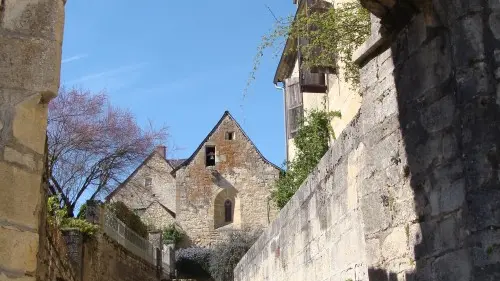
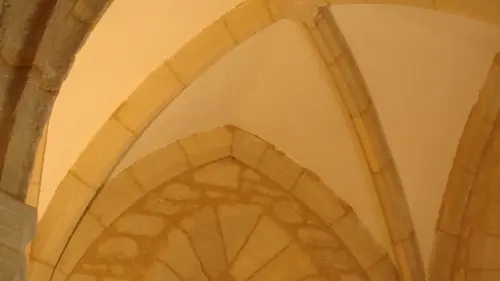
Standing directly on the rock since the 16th century, the Verneuil chapel, with its fluted columns, is the only reminder of the Château Verneuil then located in the adjoining garden, as evidenced by its south-facing entrance door. For centuries, it was an authentic private chapel, until it was donated to the commune of Saint-Robert.
Owned by the seigneurs de Verneuil, it passed through a series of alliances to the Noailles family, before being sold to the d?Amarzit family in 1796. During this period of revolutionary turmoil, the chapel was transformed into a stable.
It only regained its sacred function in the second half of the 19th century, notably when Philomène Richard d?Amarzit married Emile du Verdier. It was on this occasion that the stained glass windows (1861), still visible today, were rebuilt. The chapel was also used as a burial ground, since
Owned by the seigneurs de Verneuil, it passed through a series of alliances to the Noailles family, before being sold to the d?Amarzit family in 1796. During this period of revolutionary turmoil, the chapel was transformed into a stable.
It only regained its sacred function in the second half of the 19th century, notably when Philomène Richard d?Amarzit married Emile du Verdier. It was on this occasion that the stained glass windows (1861), still visible today, were rebuilt. The chapel was also used as a burial ground, since
Location
Location
Environment
Environment
- In the village