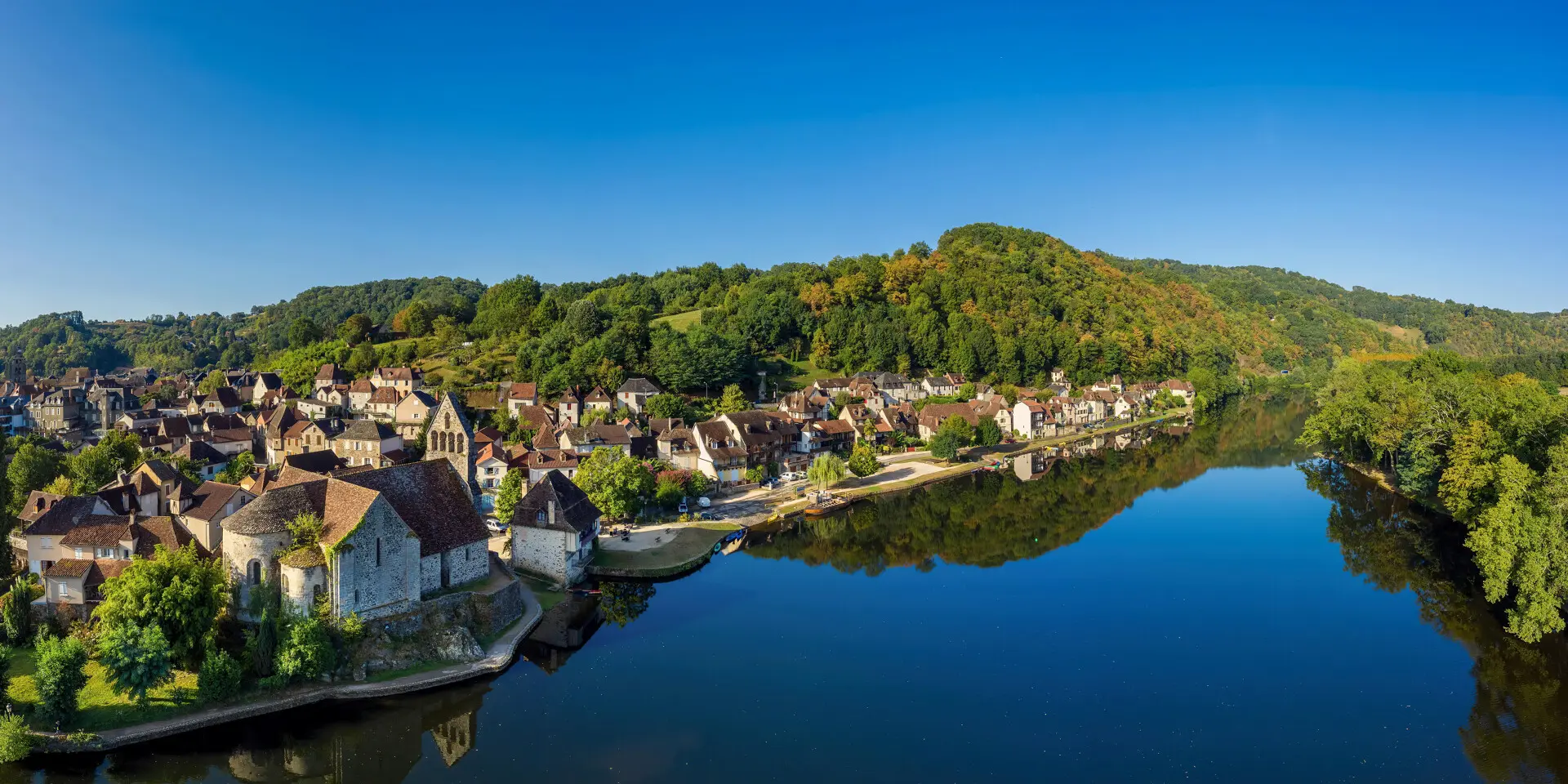
BEAULIEU
|
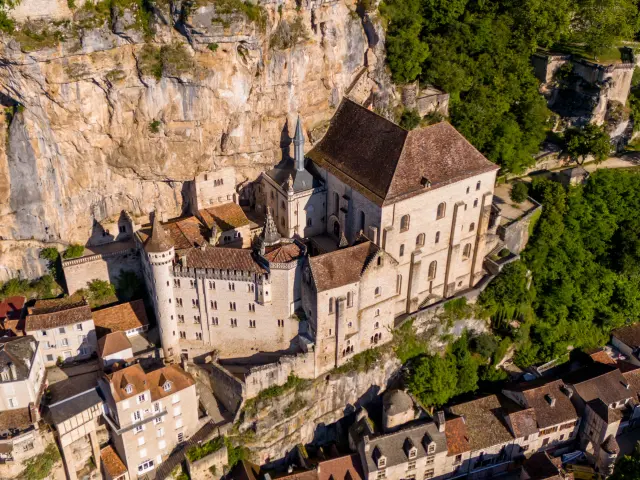
Guillaume Saramito Cdd Dordognevalley 46 Rocamadour24
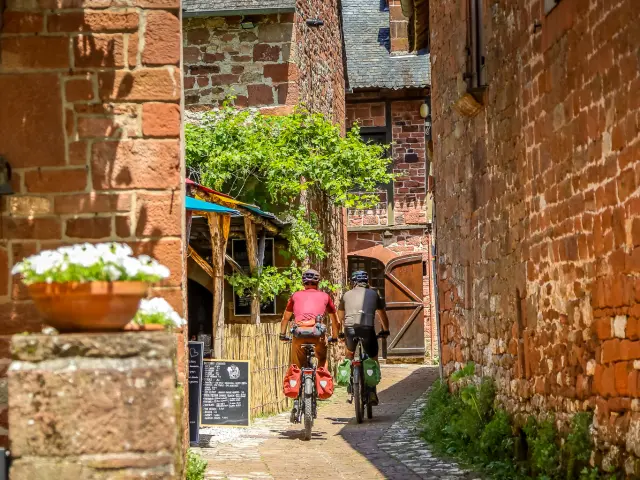
Velo Collonges La Rouge Ben Grivoz Copie
|
Few places bring together so much of what people love about France.
The Dordogne Valley is a land of spectacular villages, mighty castles, pristine rivers, remarkable caves and unforgettable food.
Stretching across south-west France, it is a destination where history, culture, nature and gastronomy combine effortlessly.
Despite its popularity, the region has managed to retain a strong sense of authenticity. Villages remain lived-in communities, markets shape local life and visitors can still find peaceful corners along riverbanks, hiking paths and medieval streets.
Nature is everywhere, from the wild landscapes of the Upper Dordogne Valley to the rolling vineyards of the Bergerac region. Add world-renowned cuisine, vibrant market towns and countless opportunities for outdoor activities, it is easy to understand why visitors return year after year.
The Dordogne Valley is remarkably diverse. It is home to 19 villages officially recognised among the Most Beautiful Villages of France, more than any other region in France. It boasts one of Europe’s richest concentrations of historic sites: from prehistoric caves and pilgrimage routes to castles that once stood on the front line of the Hundred Years’ War.
The challenge is deciding where to start exploring.
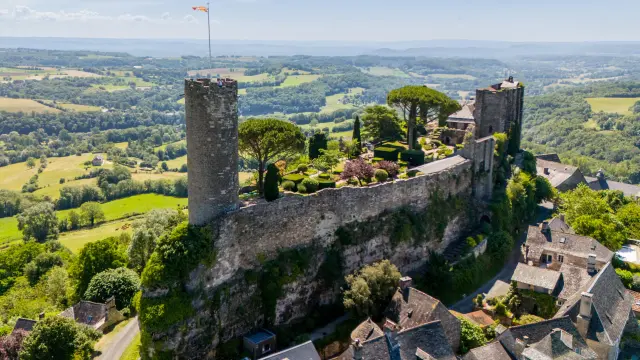
Guillaume Saramito Cdd Dordognevalley 19 Turenne13
Inspiring History
Villages, Castles and a Thousand Years of StoriesThe history of the Dordogne Valley is inseparable from that of France itself.
For centuries, this region stood at the crossroads of kingdoms, cultures and trade routes. It witnessed conflicts between France and England, the rise of powerful noble families and the growth of prosperous medieval towns whose legacy remains visible today.
Rocamadour, the sacred city
One of the most extraordinary places to experience that history is Rocamadour. Clinging to the side of a limestone cliff, this sacred city has attracted pilgrims for centuries.
Approaching Rocamadour for the first time is unforgettable. Houses, chapels and sanctuaries appear stacked on each other, suspended between the canyon below and the plateau above. Rocamadour is one of France’s most important historic and spiritual sites, drawing visitors from around the world.
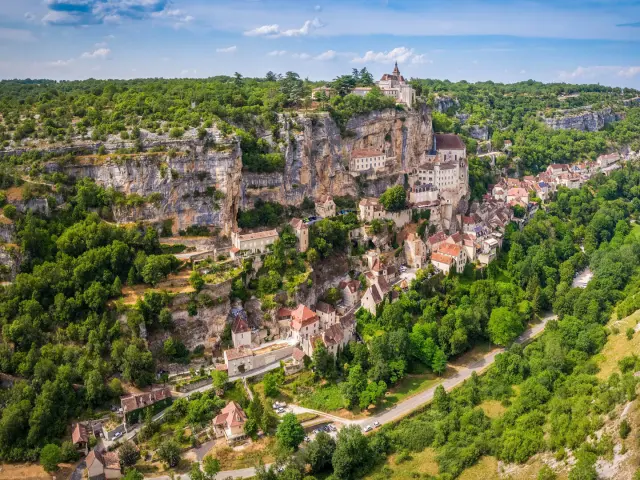
ROCAMADOUR
|
Historic Sarlat
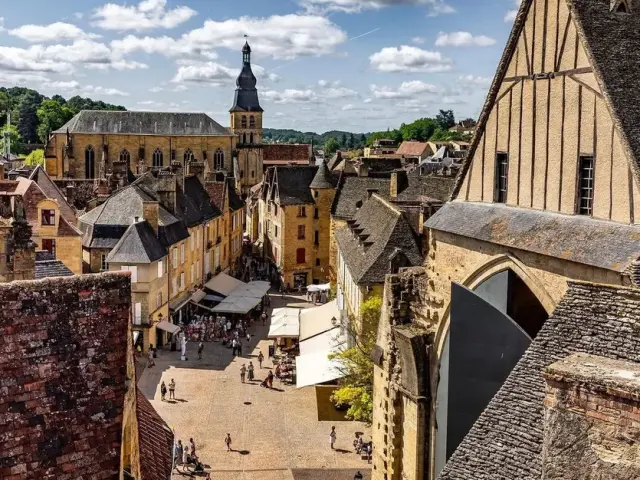
No exploration of the Dordogne Valley’s heritage would be complete without a visit to Sarlat-la-Canéda. Widely regarded as one of France’s finest medieval towns, Sarlat captivates visitors with its honey-coloured stone buildings, picturesque narrow lanes and remarkably well-preserved historic centre.
Rich in character and atmosphere, the town offers a wonderful glimpse into the past, while its vibrant markets and lively streets make it one of the Dordogne Valley’s most popular destinations.
The bastide of Monpazier
Further downstream, Monpazier offers a different perspective on medieval life. Founded in 1284, this beautifully preserved bastide town is one of the finest examples of medieval urban planning in France.
Its elegant arcaded square, geometric street layout and golden stone buildings reveal the ambition and sophistication of the era. Monpazier is also the perfect introduction to the network of bastide towns that developed throughout the region during the Middle Ages.
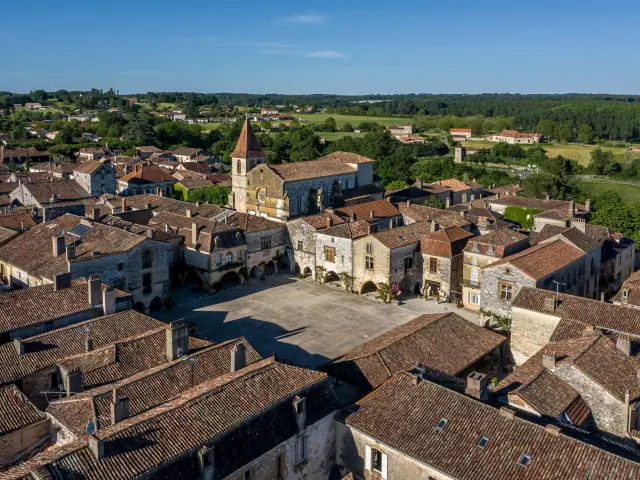
France, Dordogne (24), Périgord Pourpre, Monpazier, Village de Monpazier, (Vue aérienne)//France, Dordogne, Purple Perigord, Monpazier, Town of Monpazier, (aerial view)
|
Clifftop Turenne
Another village with a unique story is Turenne. Once the capital of a powerful viscounty that enjoyed considerable independence from the French monarchy, the village rises along a hillside crowned by the remains of its castle. Its noble residences, winding lanes and panoramic views make it one of the most atmospheric villages in the Dordogne Valley.
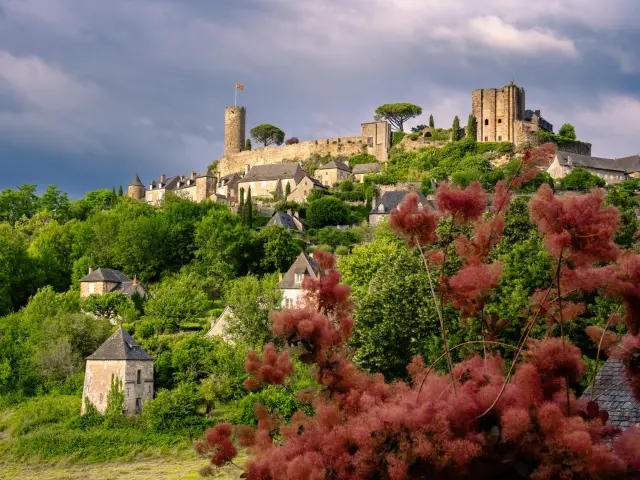
Turenne, sur le GRP du Midi Corrézien, est classé parmi les plus beaux villages de France.
|
Unique Collonges-la-Rouge
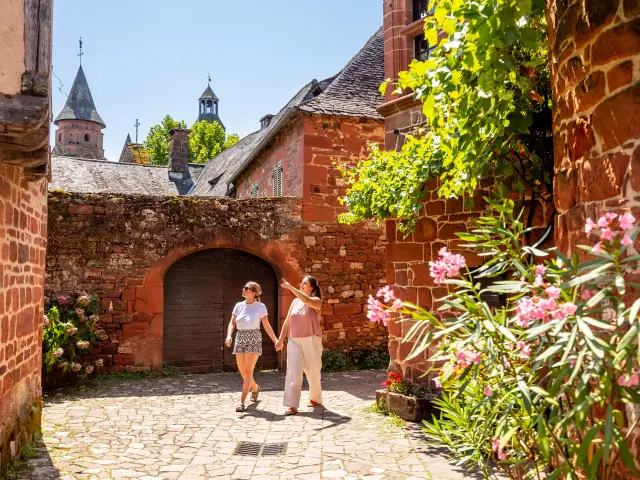
Collonges-la-Rouge is instantly recognisable for its striking red sandstone architecture. The village appears to glow in shades of crimson and purple, particularly in the evening light.
Its towers, turrets and Renaissance mansions reflect centuries of prosperity and craftsmanship, while its role in creating the “Most Beautiful Villages of France” label has helped inspire heritage preservation across the country.
Guillaume Saramito Cdd Dordognevalley 19 Collonges1
Beautiful Beaulieu
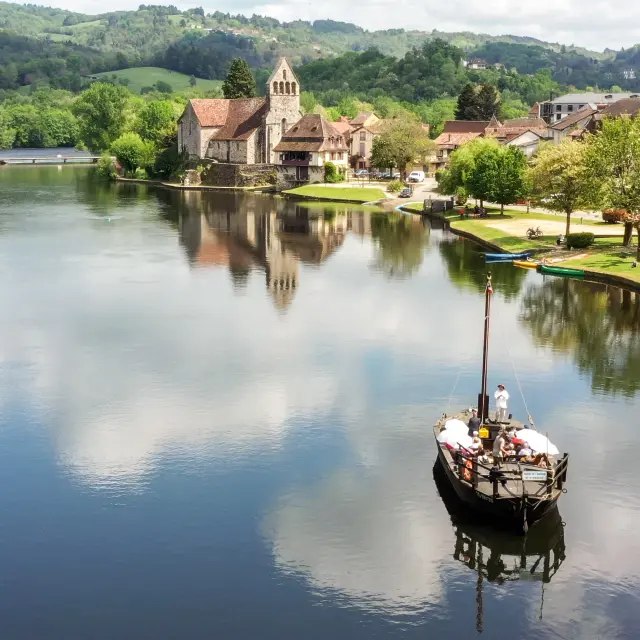
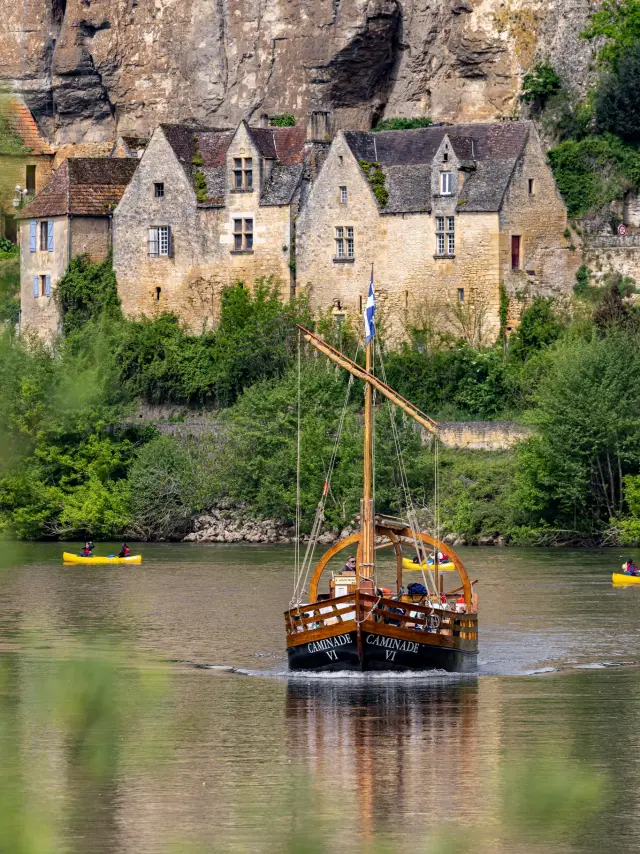
Stretching along the banks of the Dordogne River, Beaulieu-sur-Dordogne enjoys an idyllic setting that perfectly captures the charm of the Dordogne Valley. Here, you can combine both leisure activities and heritage in one place: take a swim in the river, enjoy a traditional gabarre boat trip, then stroll straight into the beautiful medieval town centre to explore its rich history and remarkable architecture, all on foot.
Gabare Beaulieu Nicolas Barbarin Atelier Castanea
Hidden towers of the Tours de Merle
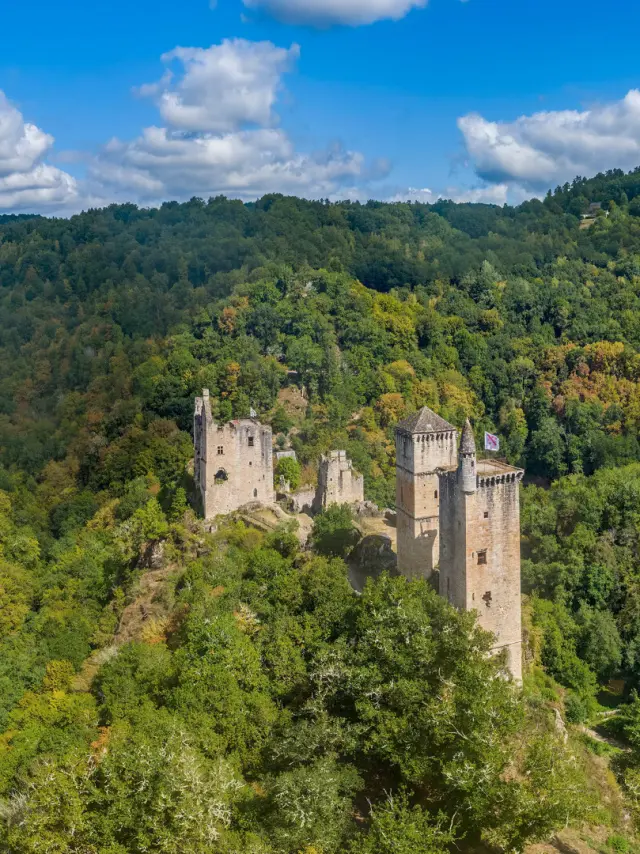
Tucked away in dense woodland, the Tours de Merle form one of the most evocative medieval sites in the Dordogne Valley. Perched on a rocky outcrop, this collection of towers and fortified residences tells the story of noble families who once competed for power and influence. Today, the ruins bring the Middle Ages vividly to life.
Château de Val in the Upper Valley
The Château de Val presents a completely different spectacle. Reflected in the waters of a vast reservoir, its elegant silhouette is one of the iconic images of the Upper Valley. Although its setting has changed dramatically over the centuries, the castle retains all the romance and grandeur of its medieval origins.
The fortress of Beynac
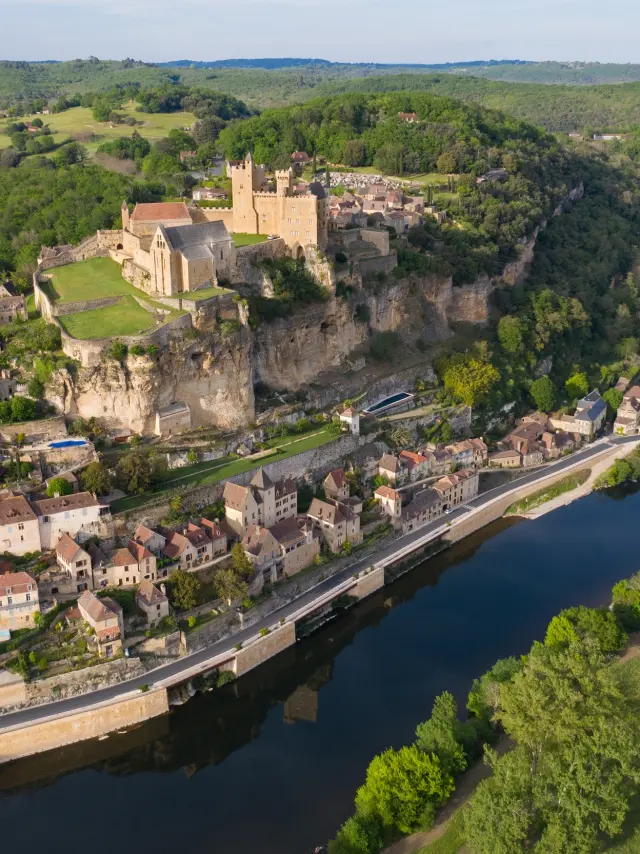
Perched high above the Dordogne River, the Château de Beynac is one of the region’s most impressive medieval fortresses. Once home to King Richard the Lionheart, the castle occupied a strategic position overlooking the frontier between French and English territories. Its imposing stone walls and spectacular setting illustrate the huge importance of the Dordogne Valley during the Middle Ages.
TOURS DE MERLE
|

Chateau De Val © Guillaume Saramito
5559 Chateau De Beynac Et Cazenac Dordogne Libre
|
Impressive Château de Biron
The Château de Biron stands as a testament to the ambitions of one of the most influential families in French history. Expanded and transformed over hundreds of years, it combines medieval, Gothic and Renaissance architecture, illustrating the evolution of building styles and society through several centuries.
Elegant Hautefort
History in the Dordogne Valley extends well beyond the Middle Ages. The magnificent Château de Hautefort demonstrates how the region continued to flourish during the Renaissance and Classical periods. With its elegant architecture and formal gardens, it is as impressive as the fortified castles that came before it.
The mighty castle of Castelnau-Bretenoux
Visible for miles across the Dordogne Valley, Castelnau-Bretenoux is one of the region’s most impressive medieval fortresses. Its distinctive red stone walls, six towers and mighty keep dominate a rocky plateau, illustrating the military power of the Castelnau barons who ruled here for centuries.
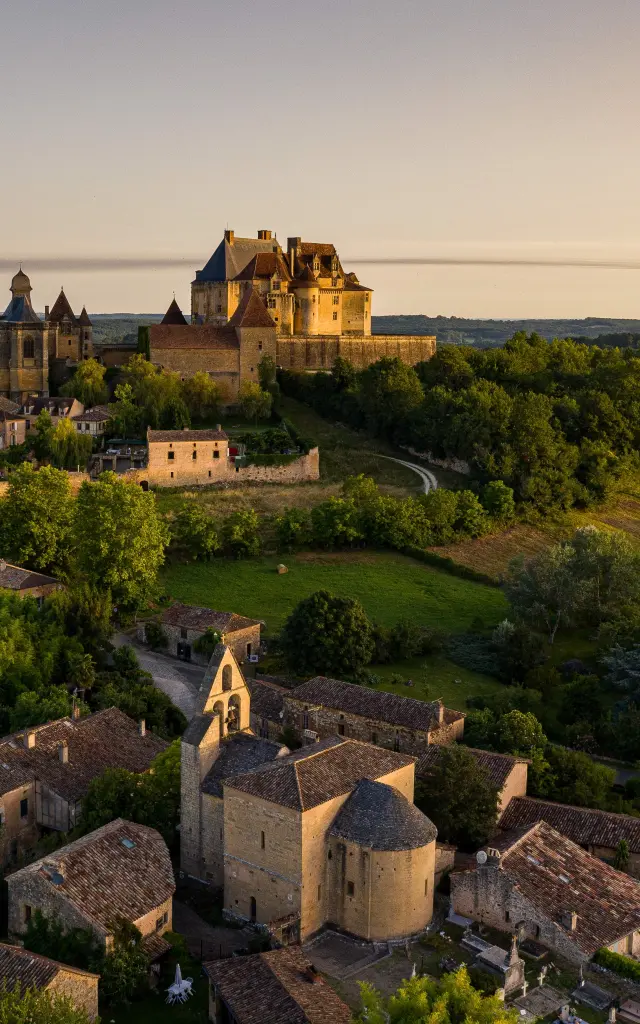
Château
|
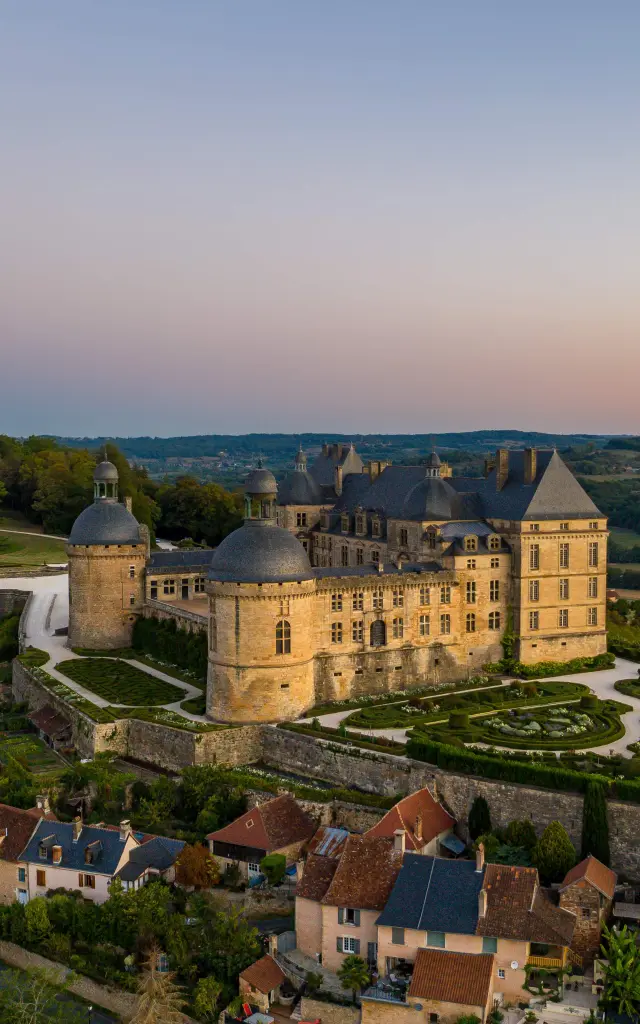
Château
|
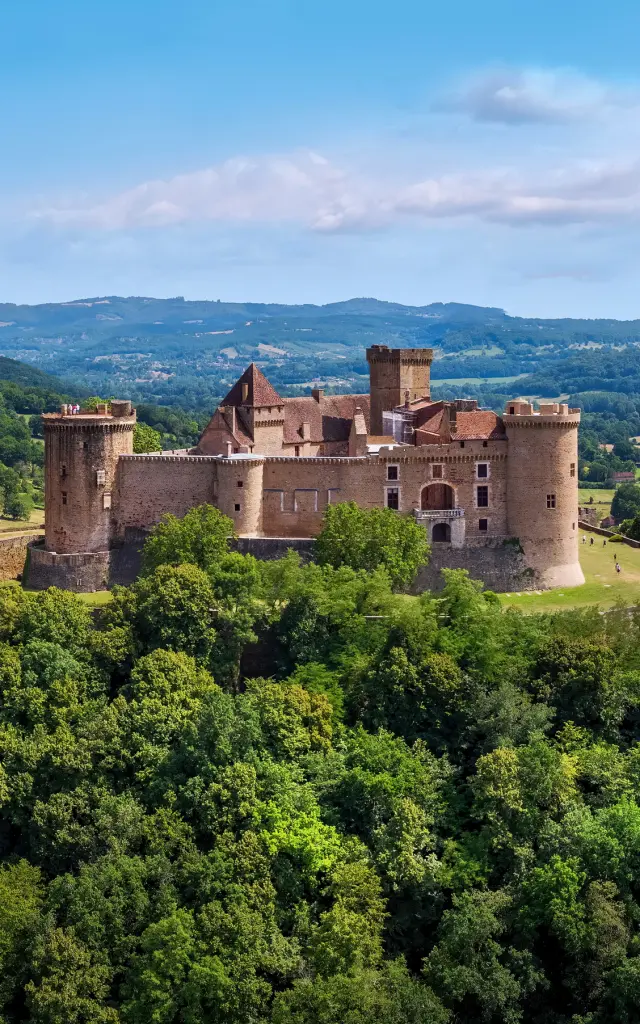
While castles dominate the skyline and rivers shape the valleys, some of the Dordogne Valley’s greatest treasures lie hidden underground.
Over millions of years, water has slowly sculpted the limestone bedrock that underpins much of the region. Beneath the surface lies an extraordinary world of caves, underground rivers and ancient shelters, where geological wonders meet some of the earliest expressions of human creativity.
The most impressive natural wonder is The Gouffre de Padirac. First explored in the nineteenth century, this immense natural chasm plunges more than 100 metres below ground and is one of France’s most spectacular natural attractions. The adventure begins with a descent into the depths of the earth before continuing by boat along an underground river.
Further west, the Vézère Valley, a UNESCO World Heritage Site, opens a window onto prehistoric times. Home to the world-famous Lascaux cave paintings and a remarkable concentration of prehistoric sites, this “Valley of Mankind” reveals the artistic genius and daily life of our ancestors more than 20,000 years ago.
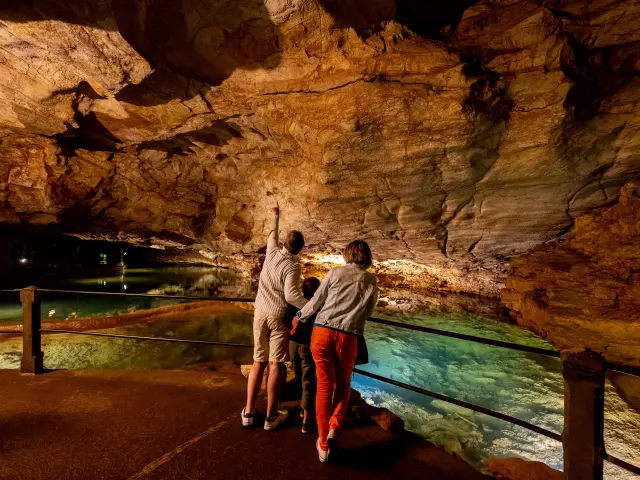
Guillaume Saramito Cdd Dordognevalley 46 Gouffre De Padirac5
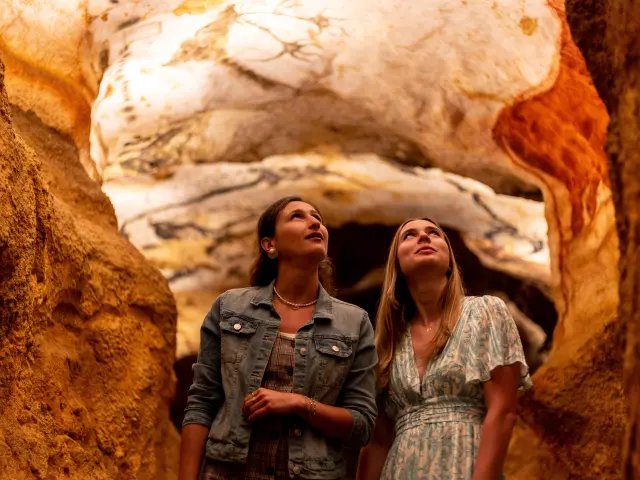
Guillaume Saramito Cdd Dordognevalley 24 Lascaux15
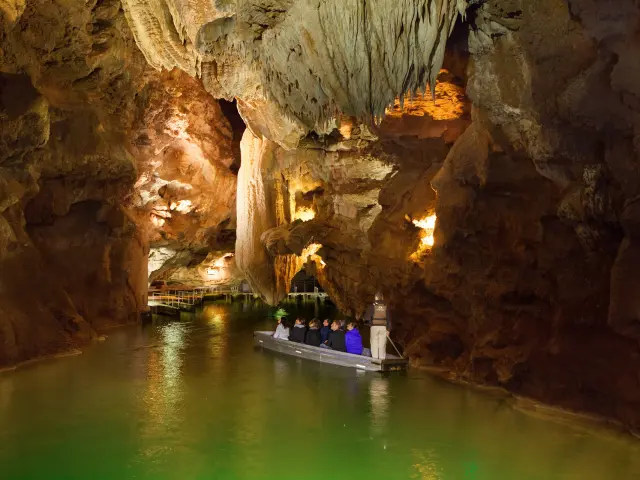
Barque avec visiteurs et guide batelier sur la Lac de la Pluie devant la Grande Pendeloque.
|
Neanderthal Museum
The voyage into the past continues at the new Neanderthal Museum in La Chapelle-aux-Saints. Built around one of the most important archaeological discoveries relating to Neanderthals, the museum offers a fascinating insight into human evolution and the lives of the people who inhabited these landscapes thousands of years before recorded history began. Audio guides available in English.
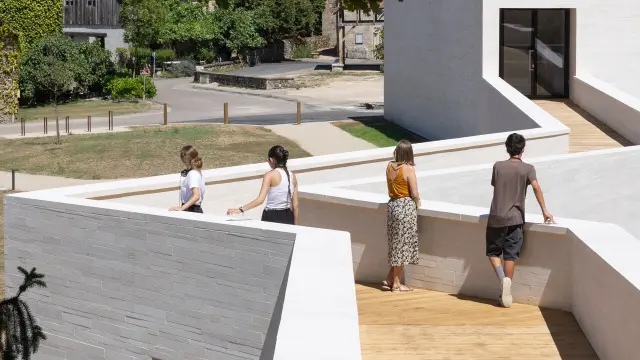
Musee De Neandertal Malikaturin 6693 Hd.jpg 1920px
|
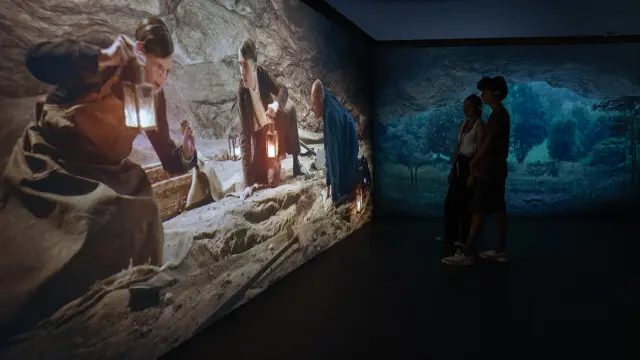
Musee De Neandertal Malikaturin 6863 Hd.jpg 1920px
|

Musee De Neandertal Malikaturin 6511 Hd.jpg 1920px
|
Nature is woven into the identity of the region, shaping its traditions, its cuisine and its way of life.
At the centre lies the Dordogne River itself, widely regarded as the cleanest river in France and one of Europe’s great natural treasures. Flowing through spectacular landscapes, it has carved valleys, nourished farmland and connected communities for centuries. Today, it remains the defining feature of the region.
Along its banks, visitors can enjoy quiet beaches, peaceful swimming spots and stretches of water that seem unchanged by time. During the warmer months, families gather beside the river while canoes drift beneath cliffs, villages and castles, enjoying a perspective that can only be experienced from the water.
The environmental importance of the Dordogne has been recognised internationally through its designation as a UNESCO Biosphere Reserve, the first river basin in France to receive this distinction. This reflects the quality of its ecosystems and the balance that has developed between people and nature over generations.
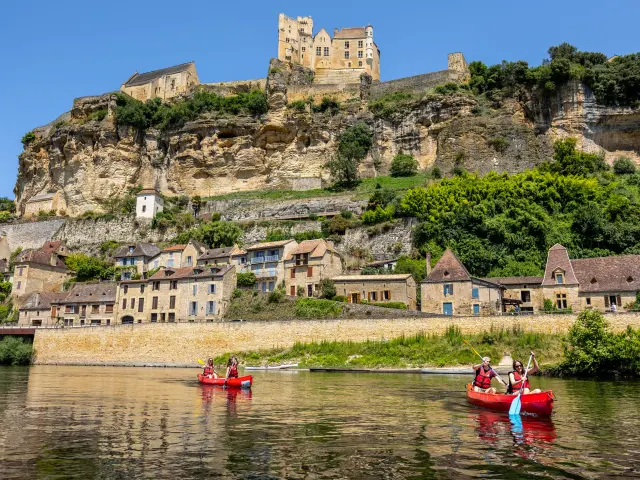
Guillaume Saramito Cdd Dordognevalley 24 Beynac3
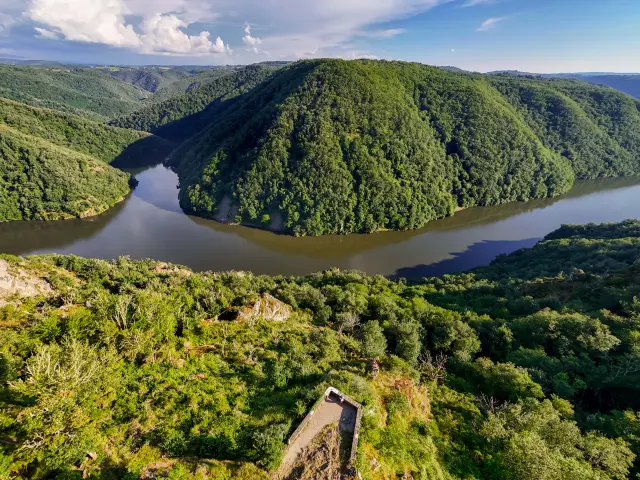
Guillaume Saramito Cdd Dordognevalley 19 Gratte Bruyere7
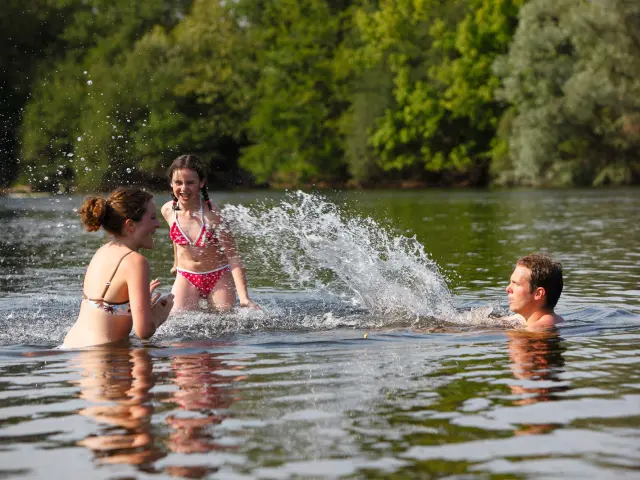
piscine, plages, baignade en rivière, parc aquatique
The landscapes of the Dordogne Valley are remarkably varied. In the Upper Valley, forests, gorges and dramatic viewpoints create a sense of wilderness that contrasts with the gentler scenery further downstream. Towards Bergerac, vineyards shape the landscape, producing some of south-west France’s most celebrated wines. Between the two lies an ever-changing mosaic of woodland, farmland, limestone plateaus, cliffs and river valleys peppered with breathtaking villages.
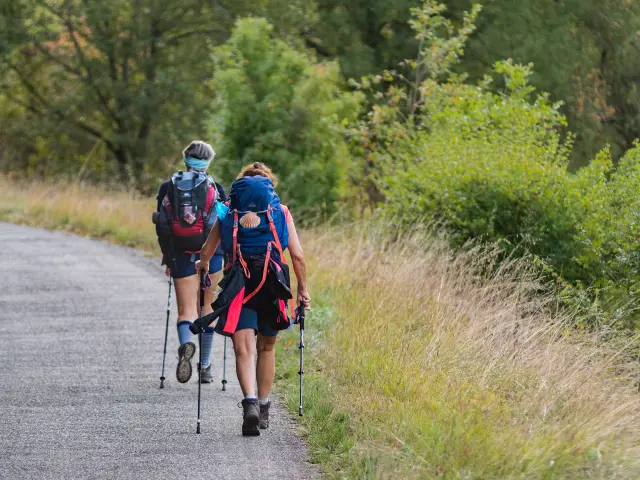
One of the greatest pleasures is simply taking the time to slow down. Hundreds of kilometres of walking routes reveal hidden viewpoints, historic paths and beautiful natural scenery. Some follow ancient pilgrimage routes, while others connect villages, through forests and streams.
Cycling provides another way to experience the landscape. Quiet country roads wind through villages and rolling countryside, while dedicated routes make it possible to explore at a relaxed pace.
On foot or by bike, the Dordogne Valley rewards curiosity and encourages visitors to discover the region beyond its best-known landmarks.
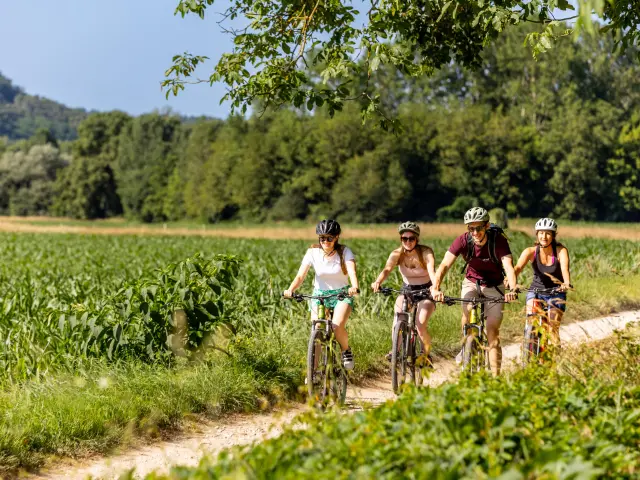
Guillaume Saramito Cdd Dordognevalley 24 Velo3
www.tourisme-lot.com
|
Weekly markets
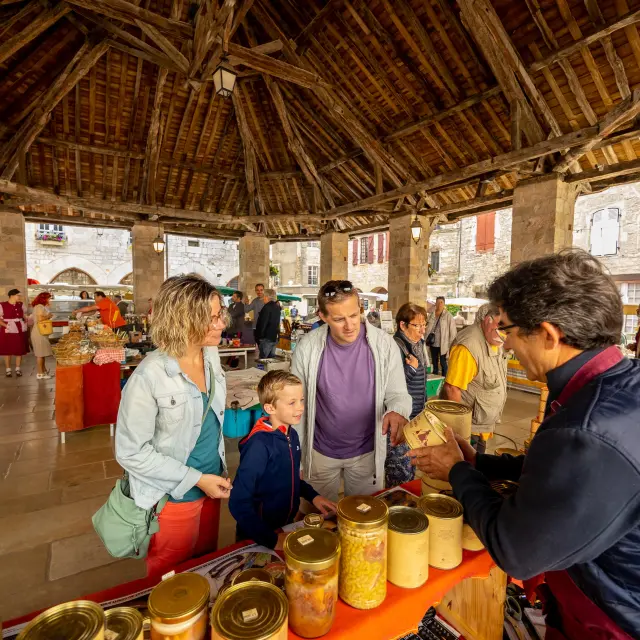
Weekly markets continue a tradition that stretches back centuries. In small villages and bigger towns, farmers, cheesemakers, bakers and local producers fill their stalls with quality products that change with the seasons.
The market in Brive is one of the most famous. The atmosphere is particularly vibrant on Saturday mornings, when the town comes alive with traders and shoppers near the historic centre.
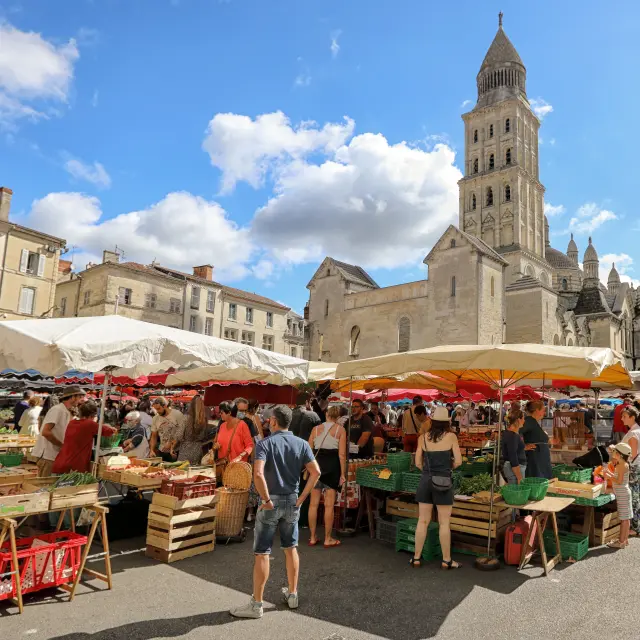
Périgueux offers another excellent market experience. The capital of the Dordogne département combines a rich gastronomic tradition with a lively urban atmosphere, making it one of the region’s most rewarding destinations for food lovers.
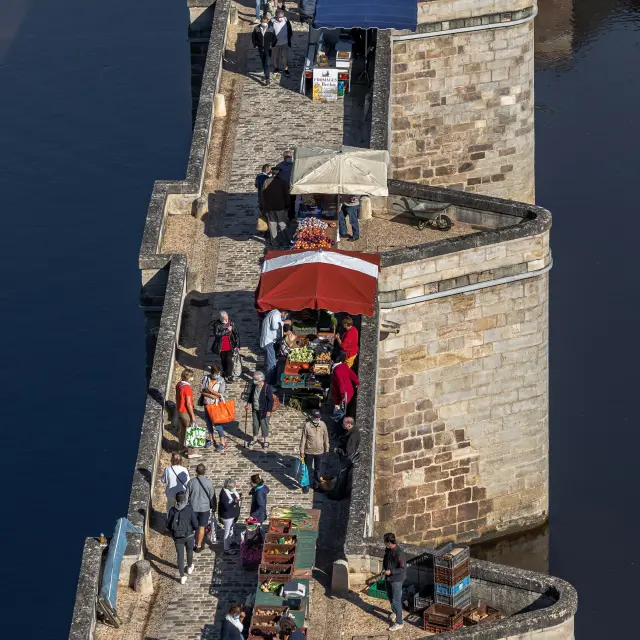
Further east, Terrasson provides a more intimate market experience where local products remain firmly rooted in regional traditions.
Sarlat’s famous market deserves a special mention for its setting, occupying streets and squares surrounded by beautifully preserved medieval architecture.
365 Marche De Perigueux Au Pied De La Cathedrale Saint Front Luc.fauret.photographe Expireson 2025 01 01 1
Guillaume Saramito Cdd Dordognevalley 46 Martel2
Terrasson
|
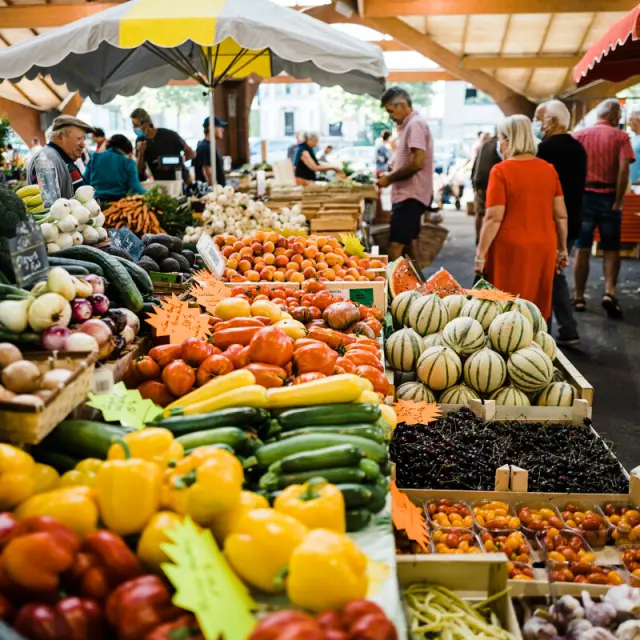
Au Marche De Brive La Gaillarde Romain Laffitte Eva Emmanuelidis 4663 1200px
World-renowned products
The ingredients that define the Dordogne Valley are among the most celebrated in French cuisine. Walnuts have been cultivated here for centuries and remain a cornerstone of local gastronomy. Truffles attract chefs and food enthusiasts from around the world. Rocamadour goat’s cheese, with its distinctive flavour and protected designation, reflects generations of agricultural expertise. Duck, foie gras, lamb, strawberries, ceps mushrooms and melons all contribute to a culinary identity deeply rooted in local traditions.
The Dordogne Valley also rewards those who enjoy discovering what is poured into the glass.
The vineyards of the region produce a wide range of wines, from elegant reds and crisp whites to celebrated sweet wines. Many estates welcome visitors, offering opportunities to meet producers and gain a deeper understanding of the region’s winemaking heritage.
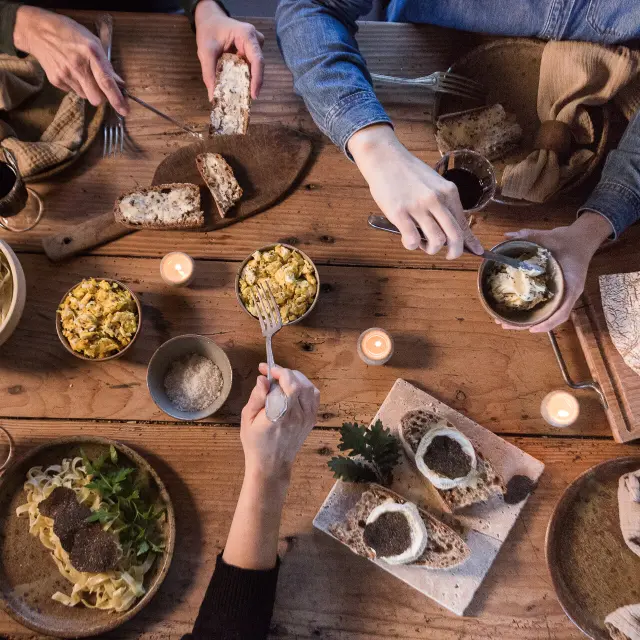
Cauvaldor Truffe Lifestyle Malikaturin 2835.jpg 1920px
|
By Plane
For many travellers, flying remains the quickest way to reach the Dordogne Valley.
Brive Dordogne Valley Airport offers direct access to the heart of the region and is served by bi-weekly flights from London Stansted.
Bergerac Dordogne Périgord Airport offers a wider choice of routes, with connections from Bournemouth, Bristol, East Midlands, Edinburgh, Leeds Bradford, Liverpool, London City and London Stansted.
By Train
Travelling by rail offers a comfortable and increasingly popular alternative to flying.
The most straightforward option is to take the Eurostar to Paris before connecting to direct services towards Brive-la-Gaillarde or Souillac. The journey combines convenience with the opportunity to enjoy changing French landscapes along the way.
Another option is to travel via Bordeaux using France’s high-speed TGV network before continuing by regional train.
By Car
For many British visitors, travelling by car is the most flexible way to experience the Dordogne Valley.
After crossing the Channel via Eurotunnel or ferry, the journey through France is straightforward, with excellent motorway connections leading south. Depending on the route chosen and starting point in the UK, driving times are typically between eight and ten hours from Calais.
Having a car allows visitors to explore villages, castles, viewpoints and markets that may lie beyond the main transport routes. A scenic detour, a village discovered by chance or a riverside stop that was never part of the original plan often become the fondest memories!
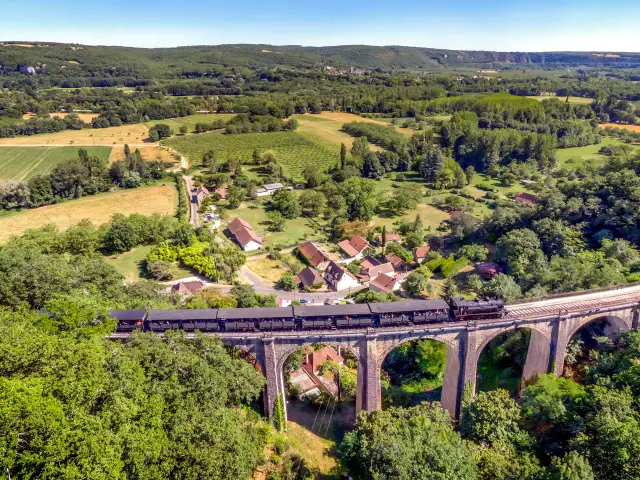
10 days from the Upper Valley to Bergerac
If you are flying over, we recommend arriving at Brive airport and leaving from Bergerac for this tour. Car hire is available at both airports.
Day 1: The Upper Valley
Visit of Château de Val
Afternoon by the lake in Bort-les-Orgues for swimming and relaxing or Canoe trip with Smile Kayak in the gorges of the Upper Valley, a UNESCO World Biosphere Reserve.
Day 2: Into the wilderness
Visit of the Tours de Merle
Hike to the Tours of Carbonnières or gabarre boat tour from Hautefage near Argentat
Late afternoon and evening in Beaulieu-sur-Dordogne
Day 3: Stunning villages
Visit of 3 of the Most Beautiful Villages in France: Loubressac, Autoire and Carennac
In Autoire, hike to the waterfall and the Château des Anglais in the cliff
Visit of the Gouffre de Padirac
Day 4: Rocamadour
Visit of the city of Rocamadour
Afternoon short hike connecting three water-filled chasms: La Boucle des 3 Gouffres
Day 5: Canoeing day
Canoeing trip from Gluges to Pinsac with picnic and secluded beaches for swimming
Day 6: On the road again
Visit of Martel and steam train tour
The village of Curemonte
Afternoon and evening in Collonges-la-Rouge
Day 7: A bit of shopping
Visit of Turenne and walk up to the castle
Lunch in Brive and visit of its lively city centre
Tour of Terrasson and its artisanal boutiques
Day 8: Périgueux by bike
Visit of Château de Hautefort and its gardens
Bike hire to explore the greenway around Périgueux
Late afternoon and evening in the charming city centre of Périgueux
Day 9: The bastide towns
Visit of the famous bastide towns around Bergerac: Monpazier, Eymet and Beaumont-du Périgord
Visit of the Abbey of Cadouin
Day 10: One more château
Visit of the impressive Château de Biron
Relaxing afternoon in the medieval village of Issigeac
More tours and experiences in the Dordogne Valley
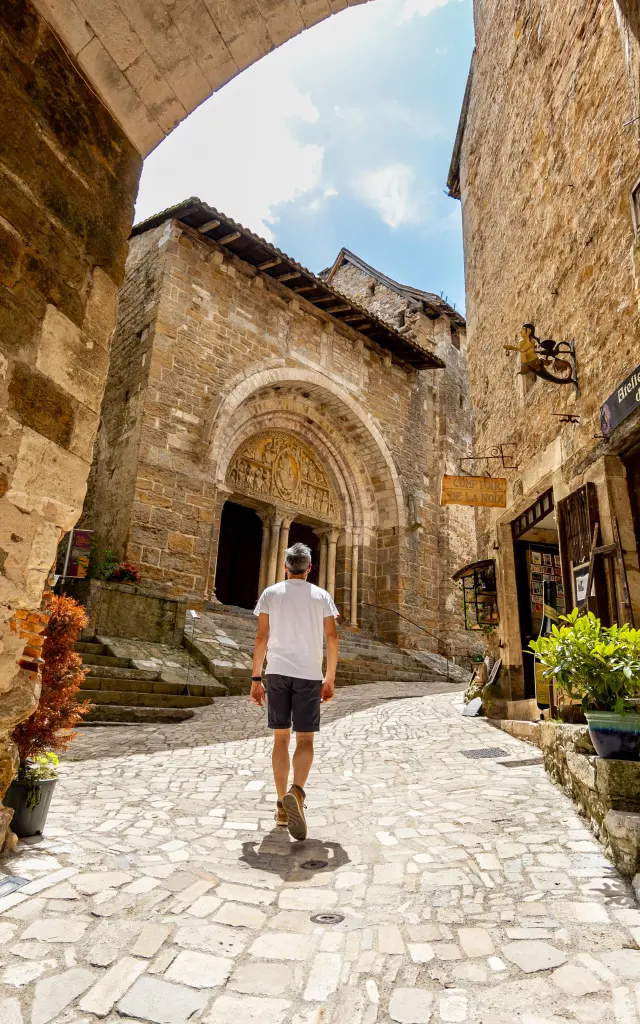
Guillaume Saramito Cdd Dordognevalley 46 Carennac3
5 days to explore
If you are flying over, we recommend arriving and leaving from Bergerac airport. Car hire available at the airport.
Day 1: The bastide towns
Visit of the famous bastide towns around Bergerac: Monpazier, Eymet and Beaumont-du Périgord
Visit of the Abbey of Cadouin
Day 2: Castle of Hautefort
Visit of the Château de Hautefort
Lunch and wander around Terrasson
Visit of Collonges-la-Rouge
Day 3: Up and down
Visit of Turenne and walk up to the castle
Lunch in Martel, tour of the village and steam train ride
Visit of the Gouffre de Padirac
Day 4: Rocamadour
Visit of the city of Rocamadour
In the afternoon, visit of the spectacular caves of Lacave or the Borie d’Imbert farm
Day 5: Périgord Noir
Back towards Bergerac through Sarlat, Domme, La Roque-Gageac and the castle of Beynac
More tours and experiences in the Dordogne Valley
CDT 24 - Tour Auto 2022
|
Perhaps you are drawn to medieval villages and castle towers. Perhaps it is the call of rivers, forests and open landscapes. Maybe you dream of wandering through bustling markets, discovering local flavours and lingering over long lunches on sunny terraces.
The beauty of the Dordogne Valley is that it offers all these experiences within a single destination.
Authentic yet vibrant. Rich in history yet firmly rooted in the present. A place where remarkable landscapes, exceptional heritage and a celebrated way of life come together naturally.

Pique Nique Au Marche De Pays Monceaux Sur Dordogne Malika Turin.jpg 1920px
|